I’ve always had a strong sense of direction. That was the problem.
What if after 7 long days trudging through the deep woods, you discovered the compass that had been guiding your every step was actually broken? You’d realize you were lost.
It wasn’t until 7 years into my creative career that I discovered I was utterly and completely lost. I was operating with a broken compass. I had a strong sense of direction, it was just the wrong direction. If you are headed in the wrong direction, the sooner you stop and turn back, is actually when you begin to make real progress. It wasn’t until I picked up a camera and started taking self portraits did I begin to find the way. The most important lesson I’ve learned is this: what matters more than anything a photographer has in their kit is the heart from which they create.
I was working in the movie industry pursuing the American Dream: appearing really busy and successful on Instagram and trying to be the envy of all my friends. There were two problems: my life was not at all as it seemed. (And even if it was, that dream of material success is unfulfilling at best.) I always seemed to have a little month left over at the end of the money. And the industry was eating me alive. It was not an uncommon experience at the time to be following up on the 30th day for that net 30 payment, only to be told they would put the check in the mail tomorrow. I remember shedding tears walking out of the grocery store one day because I accidentally spent $40 instead of $20 on groceries which meant I couldn’t put gas in my car. I was broke and brokenhearted.
I couldn’t take it anymore. I needed a change. I decided to shift focus from motion picture into still photography. I wanted more freedom and something about it seemed simpler. Less encumbered. I figured I only needed a camera and at least one working eyeball to start my new career in photography.
Scraping together a few dollars I bought a camera, a Canon 5d mk4, from a friend for a great deal. I couldn’t even afford a lens for another year so it just sat and gathered dust while I mopped floors at a gym and worked security at a parking lot. Then another photographer friend, Will Luna, taking pity on my circumstances, gave me a lens! What a guy! There was a slight catch. The lens was broken! Willy had dropped it and it was totally wrecked. He couldn’t even get the shattered UV filter off the filter ring. But the promise was this: if I paid to get it fixed, I got to keep it.
I took my new gently used completely broken lens over to the Canon repair shop in Orange County California. A part of me was hoping they would just like me enough to fix it for free. I put on my best charm as I handed over my lens. I’m pretty sure I felt my soul start to leave my body when he told me how much it would cost. It was about one billion dollars. But to get a new lens was around two billion dollars, so I actually was saving about one billion dollars. By this time I had quit the security job because it was dangerous and I got fired from the gym. I was living in my mom’s apartment and had no income. But I figured when I became a famous photographer I’d have at least three billion dollars so this was an elite business maneuver and I’d definitely be profiting. (Feel free to check my math on that and email me what you find at seth@thecowboyphotographer.com.) I loaded up my credit card and got the lens fixed (this is not a smart idea, don’t do this). I dusted off that camera that had been sitting and got ready to work.
If you asked me, I was a photographer! I had a camera, and now it had a lens, and the lens even worked! I had it all. Except for maybe a few important things like: clients, an income, or a portfolio.
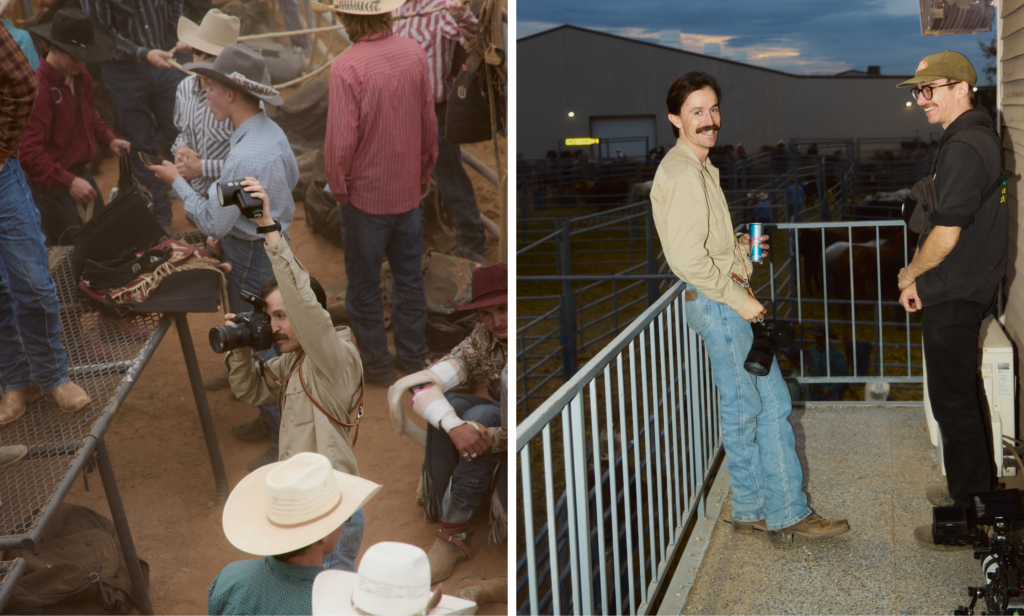
Let’s pause. I’m sure by now you’re thinking, “this guy is nuts and doesn’t know what he’s doing” and that’s absolutely correct! And yet somehow today I have the honor of being the first living photographer ever permanently installed at the National Cowboy Museum in Oklahoma City. I’ve even had my story told by Capture One in a documentary short called “How I Healed Through Cowboy Photography.” What I hope is clear is that my journey was anything but glamorous. And we can gather now that something massive had to shift for me to get from there to here. A radical renovation of the heart. Self portraiture played a role in that. And thus started what became a life changing process of self portraiture.
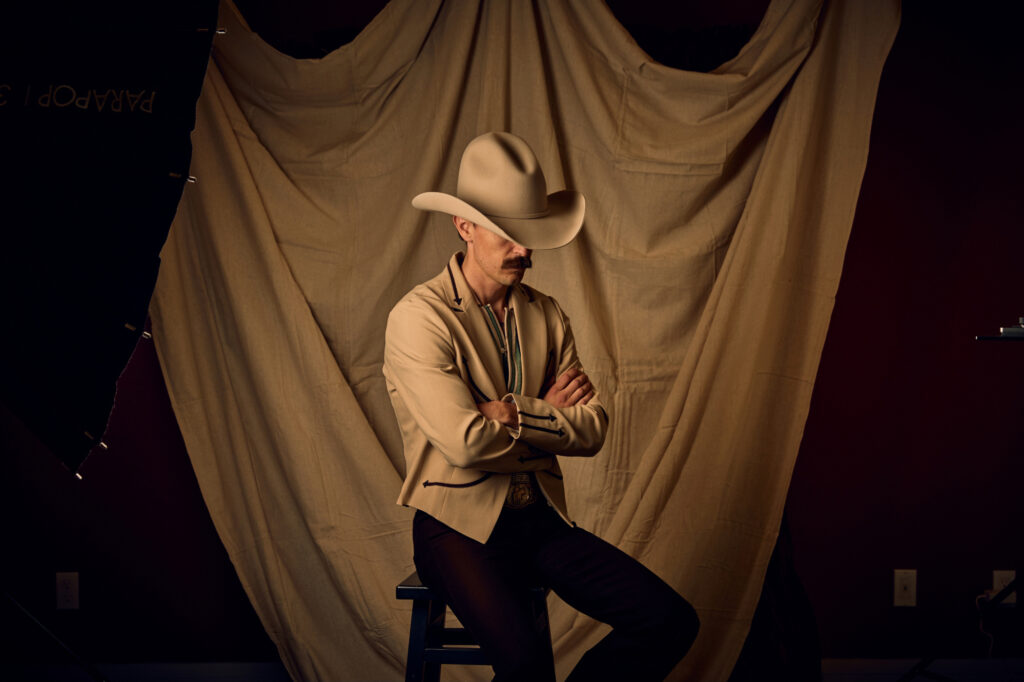
Self portraiture started as a practical solution to an inconvenient problem – I didn’t have anyone to photograph. In my mother’s living room, I set up a tripod, a chair, triggered the self timer, and hurried over to my seat. But something deeper was revealed in that first self-portrait session. I was being confronted. I had turned the lens on myself and began a process of self examination. Let’s be real, my life wasn’t exactly going smoothly. I was flying by the seat of my pants. Somewhere in the process of that timer going off, hearing the chunky sound of that DSLR shutter, and reviewing my self portrait, I began to apprehend something that would reorient the rest of my life:
Self portraiture is a way of turning the lens of the heart back on itself.
And that I needed to make a few adjustments.
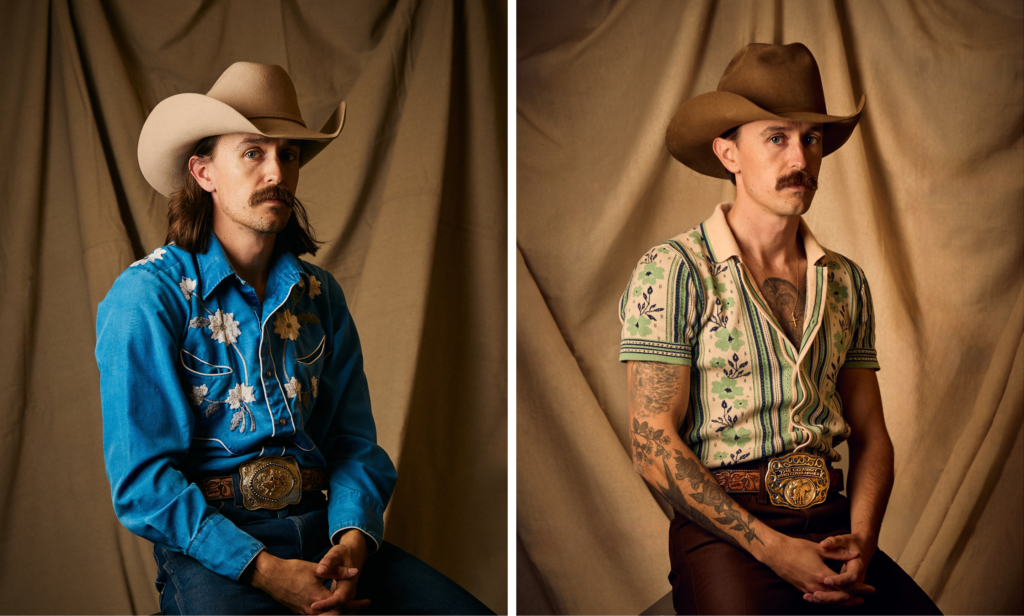
When I talk about the heart, I don’t mean that fist-sized muscular organ pumping blood through your chest. And I don’t mean the emotional life of the artist — the moods, the inspiration, the creative “vibes.” The heart is the wellspring of your identity, your desires, your motivations. The heart is the place all your thoughts, words, and deeds spring from. Your biases. Your preferences. It’s the lens you view the entire world through, whether you’ve ever examined it or not.
And here’s the thing about portraiture — you already know when the heart is in the wrong place. You may not be able to articulate it, but you feel it. One glance is enough. Maybe it’s the discomfort displayed in a subject’s eyes. Maybe it’s an unflattering angle chosen for the wrong reason. Maybe it’s just a subtle sense of deceit underneath an otherwise “nice” photo– inauthenticity. This is usually when one comments it feels “posed.” Whatever form it takes, it’s the shallow, unconsidered intentions of the photographer springing from the heart, made visible.
You feel it just as clearly when the heart is aligned. It’s the instant connection radiating off an image. It’s the sense that the person in the photograph is actually being who they actually are, not performing who they think they should be. That difference isn’t technical. It’s not about your camera, your lens, or your lighting setup. It’s the heart, made visible through the image.
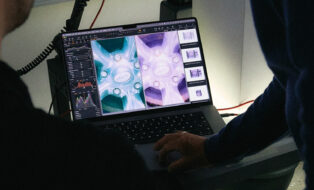
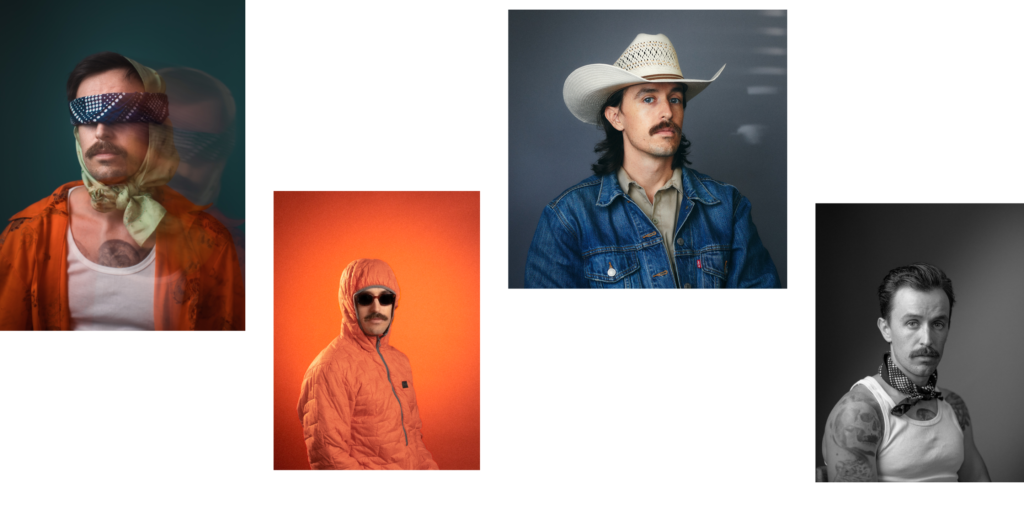
It wasn’t until years later, did I have the critical breakthrough as to what self portraiture could reveal in a person’s heart. I was sitting in the FINDLab art gallery which was displaying my first solo exhibition. And this timing coincided with Capture One filming this documentary short about my story. So I got this documentary film crew following me around– pretty surreal– and as you would expect, I’m using Capture One to take a self portrait. My camera is tethered to my laptop. I hit command + K, the shutter goes off, and my portrait is captured. Something is tangibly different about this one. Months go by before it occurs to me: this is the first self portrait I have ever smiled in. In the past I had suffered so much for my art, the tenacity and emotion came through in my countenance. Yet now, I found myself reaping the fruits of my labor and I couldn’t contain my joy.
Now I’m not sure where you’re at in your journey. But I want you to heed this lesson: I didn’t wait until I had clients, a portfolio, or a plan. I didn’t have all the gear. I had a broken lens and a self-timer. I was full of doubt and fear. I started before I was ready. Starting is what made me become ready.
Turning the lens on myself revealed the deeper problem of my life: that my compass was broken. Not because it pointed the wrong way but because it had nothing outside itself to point to. I was self-reliant, striving in my own strength, and evidently drowning. Don’t get me wrong. The solution was never “discovering myself.” It was admitting I needed saving and discovering faith. Faith recalibrated my direction and reoriented my entire life. My photography changed as a result of an inner transformation. And the greatest lesson I learned: the heart of a photographer matters infinitely more than any piece of gear in their kit.
I still turn the lens on myself occasionally but it’s never to glorify myself. It’s to show how faith has radically transformed me from this bitter despairing drowning man into someone with an unfailing hope and inexplicable joy.
New to Capture One? Try for free for 7 days.