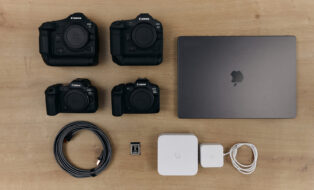
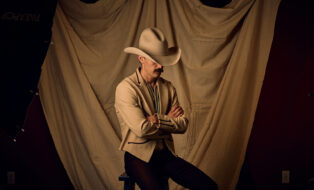
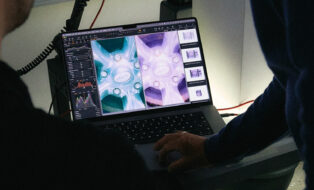
No flash, no studio. Here’s how three Capture One RAW Talent winners made their work and shared something true to themselves.
Three winning projects. One is a set of portraits built around a single uncomfortable question. One is about the draft of air that moves through a subway passage. One is about people who live on boats.
On paper they share nothing. In practice, none of the three used a flash. All three found their subject somewhere they had already walked past a hundred times. And two of them came out of the London Underground.
We asked each of them how the work happened.
Jenny Liao: Probe
Jenny Liao was an oral surgeon before leaving the profession to study photography at the University of the Arts London. Now based in China, she built Probe around a question she had wanted to ask other people for years, having once struggled to answer it herself.
“Is there a trait that has often been discouraged or undervalued throughout your life, but that you still choose to keep?”
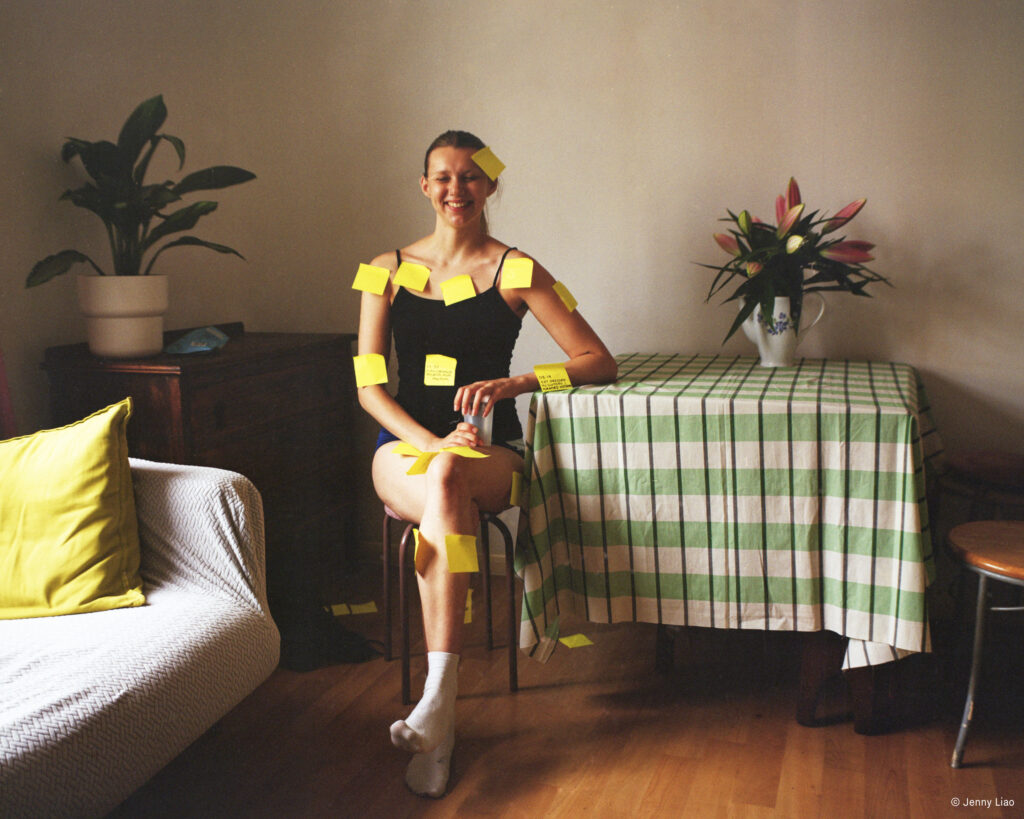
Every portrait started as a conversation and became an image built from the answer. The first person she photographed was a classmate, Eia, who said she keeps her life highly structured even though everyone around her tells her to go with the flow. Liao covered her in sticky notes listing her daily schedule.
“At that time, I was still uncertain about the direction of my graduation project and struggling with anxiety about what I was making. But the moment I saw the scans, I knew I had to continue.”
The lighting setup is whatever the room already has. “I mainly use natural light in my work. Even when a photograph is carefully planned, I often work with the available light in a space and build the image around it.”
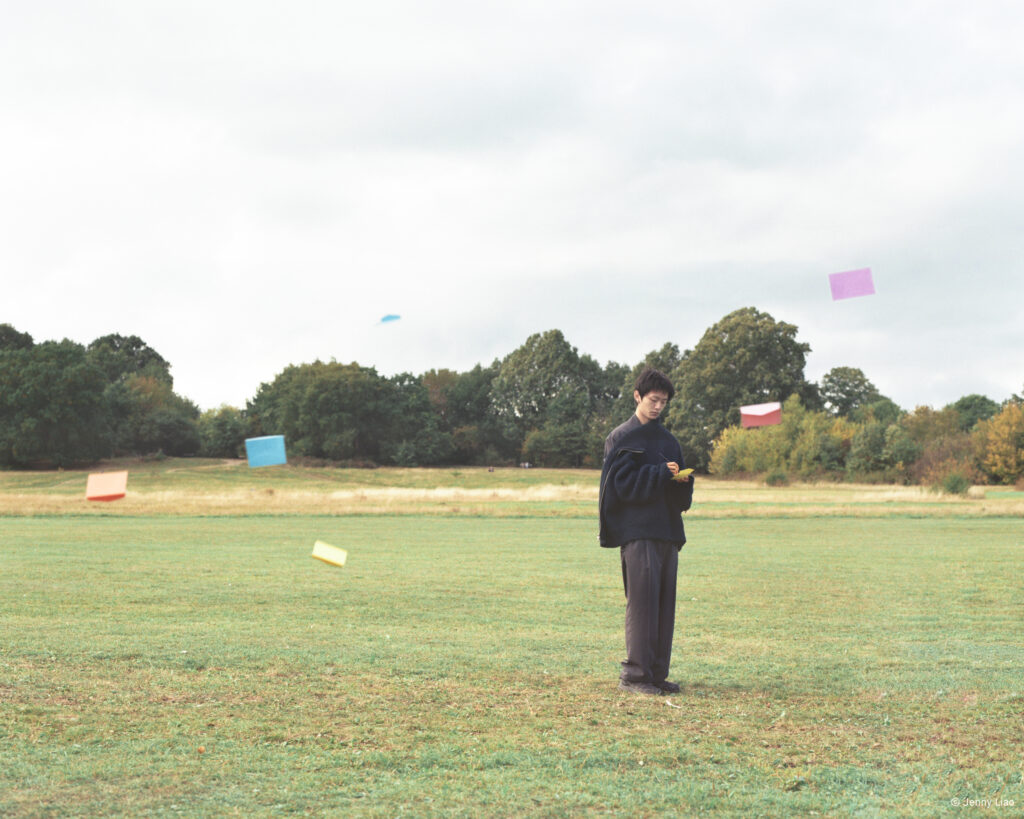
A good shoot, for Liao, is one where the camera stops being the point. “The best shoots feel more like spending time with a friend than being on a set. Once people stop thinking about being photographed and become immersed in the moment, the photographs tend to emerge naturally.”
Asked about influences, she noted conversations rather than photography. “Hearing how different people experience and interpret the same reality has made the differences between people feel much more real and tangible to me.” Asked about equipment she could not live without, she picked the camera, then corrected herself. “If I’m honest, the thing I rely on most is a good conversation. I’m not much of a gear person. Photography starts with observation and connection. The camera usually comes later.”
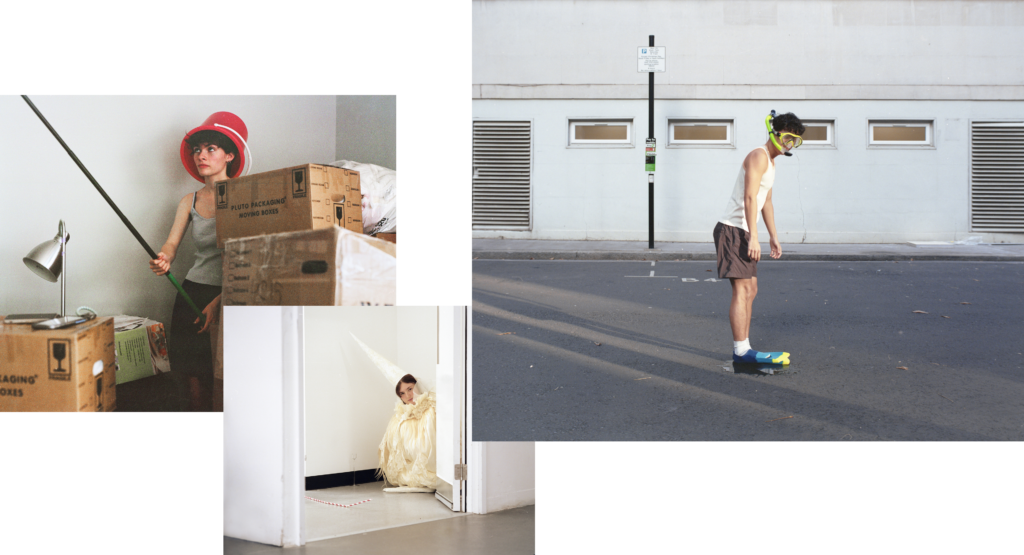
The oddest place she’s found an idea is the subway, and specifically the people zoning out in it. “Everyone is in the same place, but in completely different mental and emotional worlds. An ordinary commute becomes a moment full of imagined narratives.”
The clinic is still on her mind, but it’s no longer the whole plan. “I want to move from expressing myself through what I photograph to expressing myself through how I see,” she says. The doctor-patient work has become one thread among several, alongside commercial projects and a career that supports both.
Changke Li: A Sudden Gust of Wind
Changke Li found her project underground.
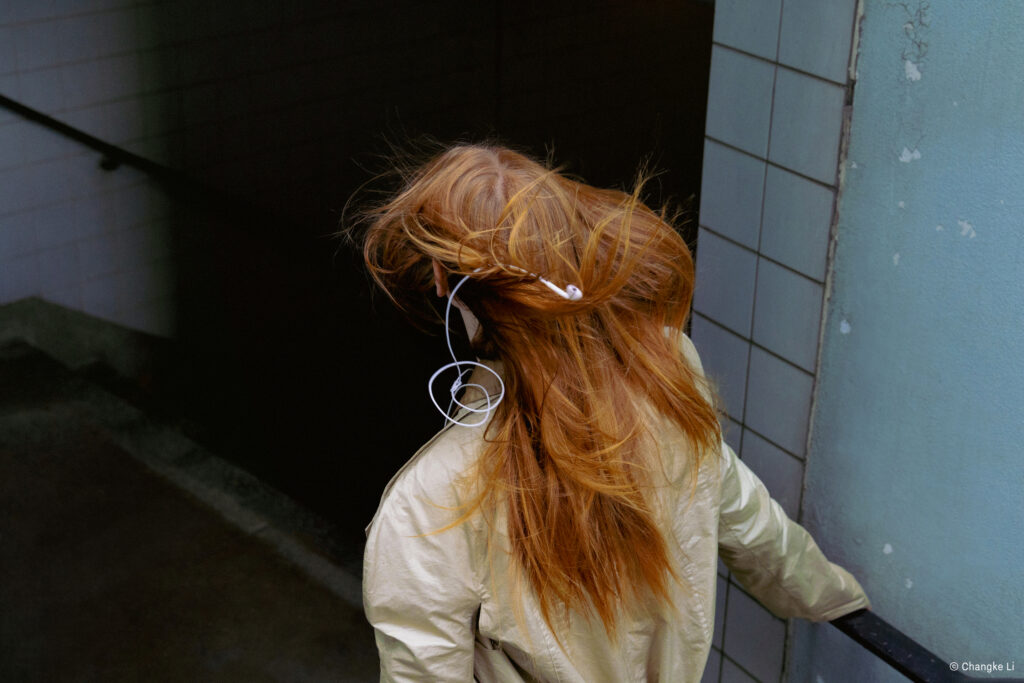
“By tracing the movement of the wind as it briefly interrupts familiar routines and gestures, the work captures fleeting moments of spontaneity that might otherwise go unnoticed. These images reveal beauty in the unexpected, inviting viewers to pause, look more slowly, and become attuned to the subtle shifts that shape our surroundings.”
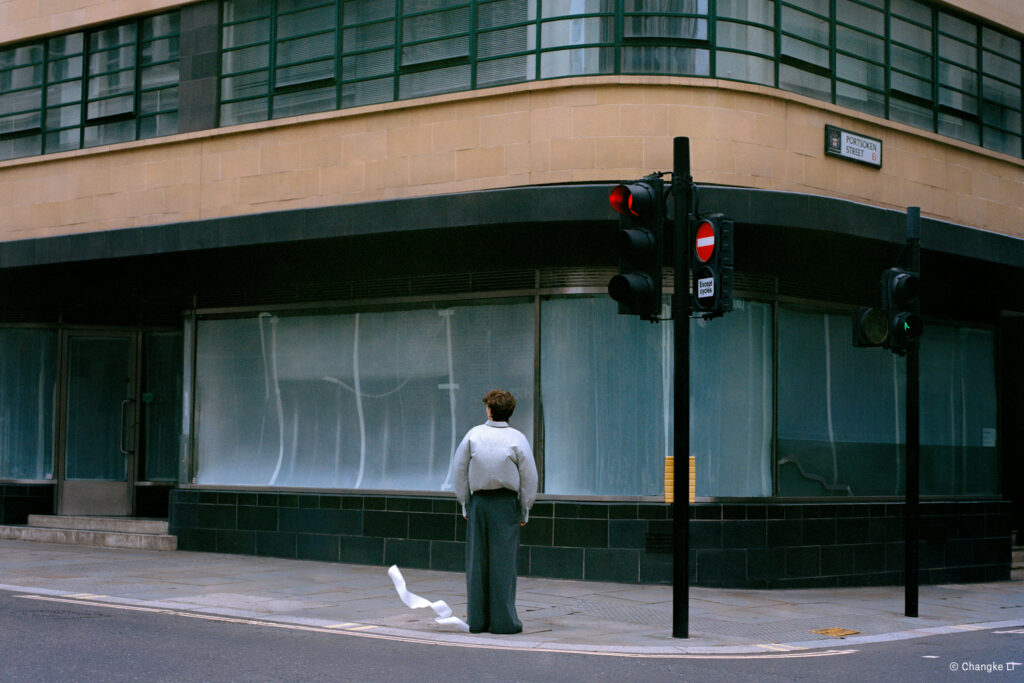
A Sudden Gust of Wind was shot entirely with non-professional models. Some were classmates she bumped into at school. Others were strangers she messaged on Instagram. Almost all of them said yes immediately. Every one of them is photographed from behind.
“Even though all of them are only shown from behind, their faces have stayed with me ever since.”
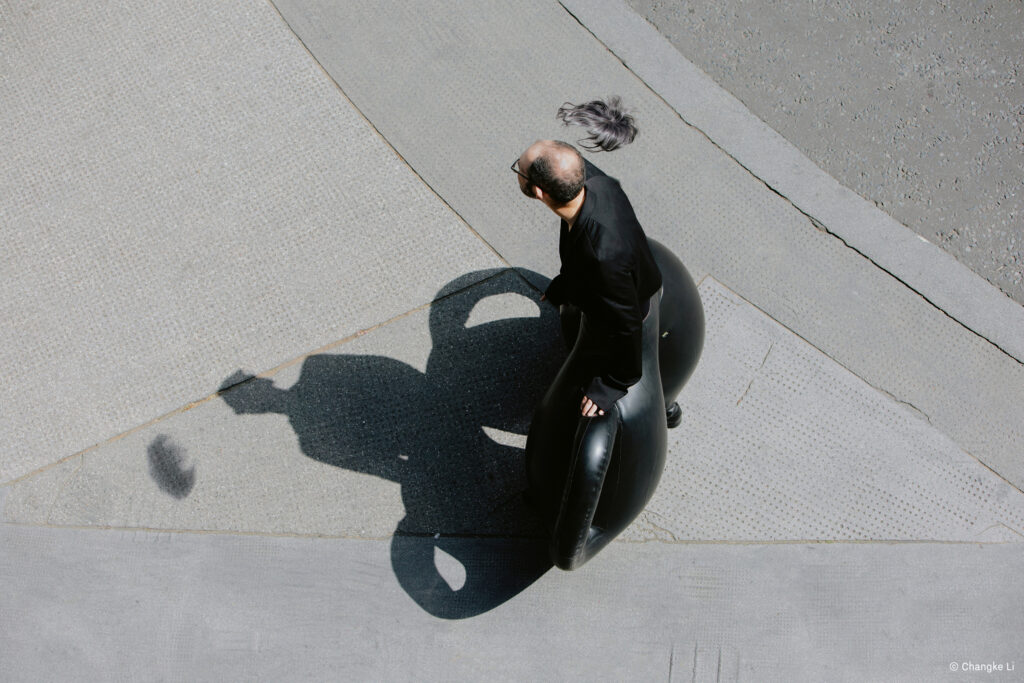
She plans her light well in advance. For the image of a man whose wig lifts into the air, she spent time watching how shadows moved across the location at different hours, then picked his moment.
“I hoped the model’s shadow would look a bit like a pair of scissors, echoing his hair and adding a playful touch to the image.”
Ask her what makes a shoot go well, and she is blunt about it: “Honestly, I’m still searching for the answer.”
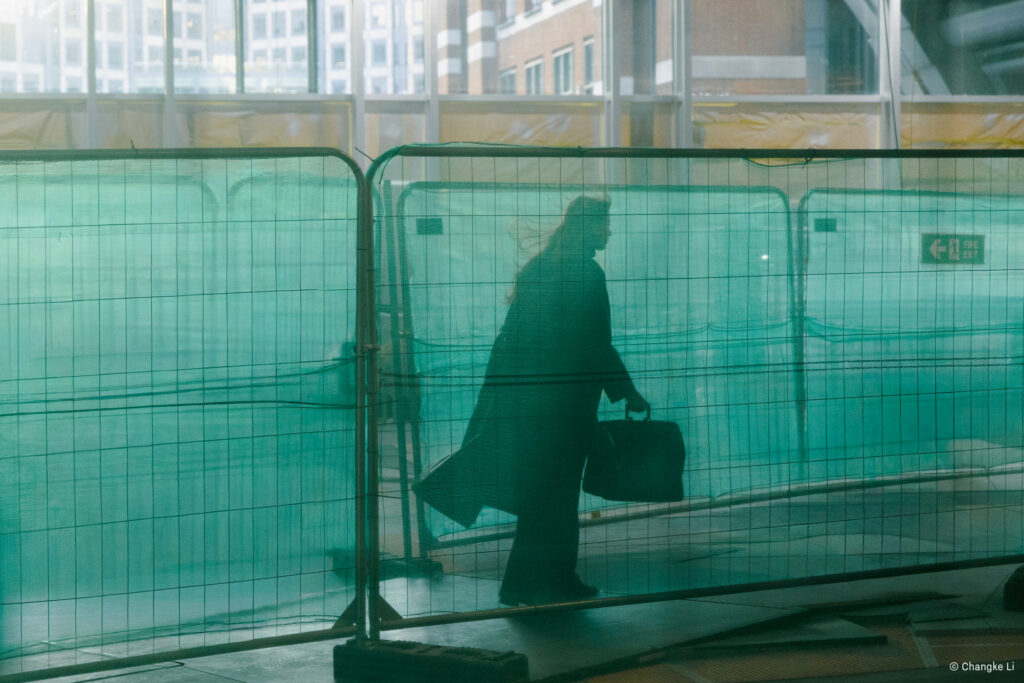
Her influences are films, Japanese animation, and painting, plus a habit of mentally stepping back from reality to think about her work. One picture in the exhibition started with a piece of toilet paper stuck to her shoe, which she noticed well after leaving the restroom. There is now a photograph of someone stepping on a piece of paper caught in the wind.
She is working towards a life as an independent photographer, with a commercial and personal practice pulling in the same direction.
Tse, Yu: The House That Floats
Tse, Yu was walking through Little Venice when a friend mentioned that people live on the narrowboats year-round. Coming from Taiwan, he found that hard to place.
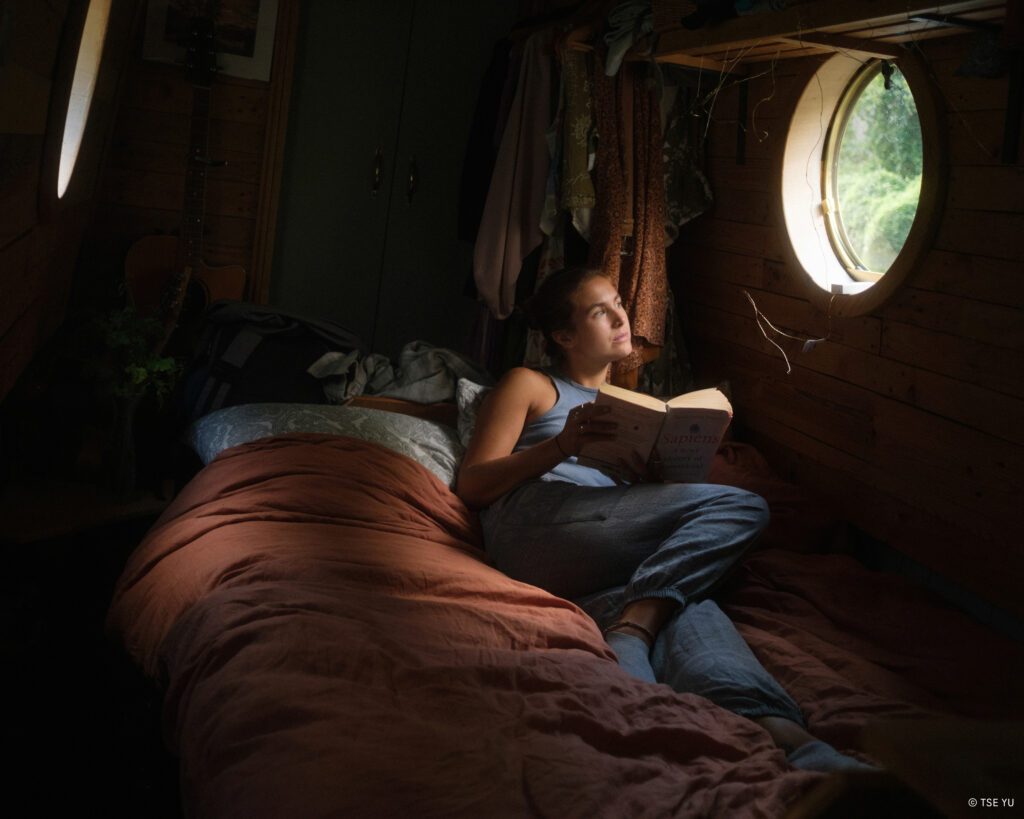
“In traditional Taiwanese culture, the societal blueprint for adulthood usually follows a strict sequence: first buying a car, then a house. The vehicle represents the tool for the daily grind, while a house symbolizes stability, security, and the accumulation of wealth. Yet a houseboat feels like a paradoxical fusion of both.”
That contradiction became The House That Floats, and a question he is still working through. Does a home have to be a fixed structure, or is it a state of mind?
For Tse, Yu, the window is the light kit. “When I’m shooting indoors, the windows are my main light source, so I’ll just open or close them to control how the light fills the room.”
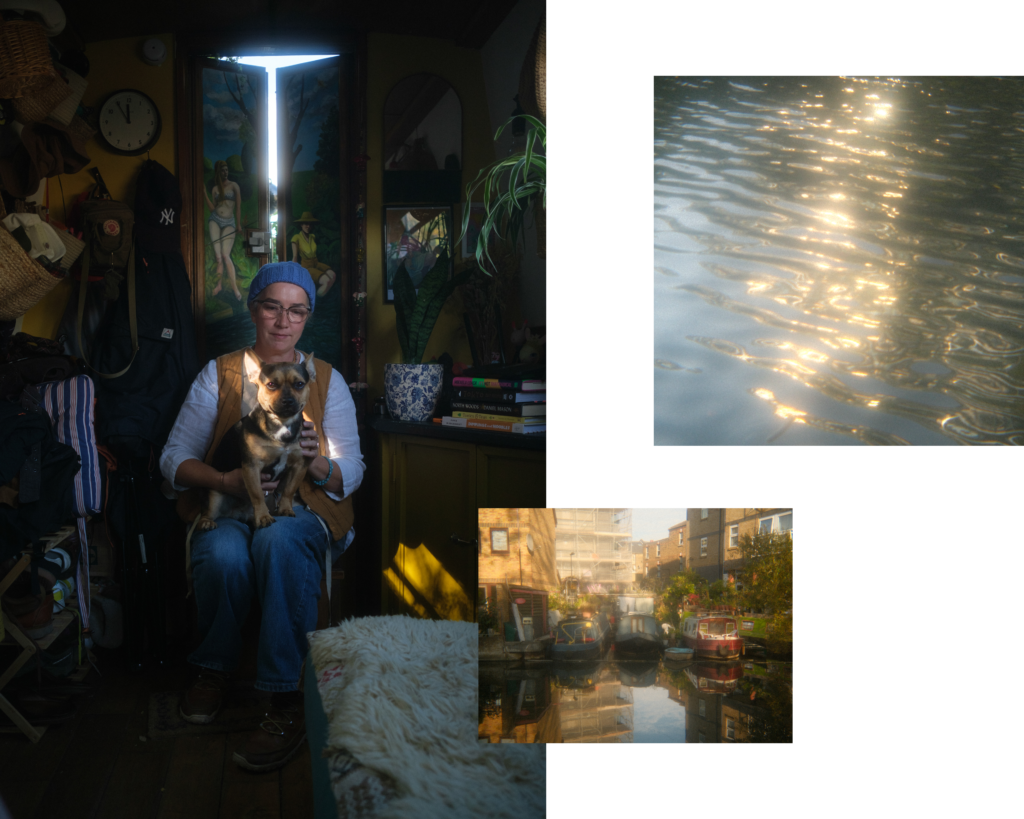
His favorite frame in the exhibition is a portrait of Jess, an artist who lives on a houseboat with her dog Archie. He posed her by the entrance, in front of double doors she had painted herself, then cracked the doors open a sliver so a narrow beam did the work.
He describes shooting as a trade-off between control and attention. “You can plan everything, but once you arrive, it’s all about reacting to the space and the light. The most beautiful frames often come from unexpected moments when you slow down and just watch.”
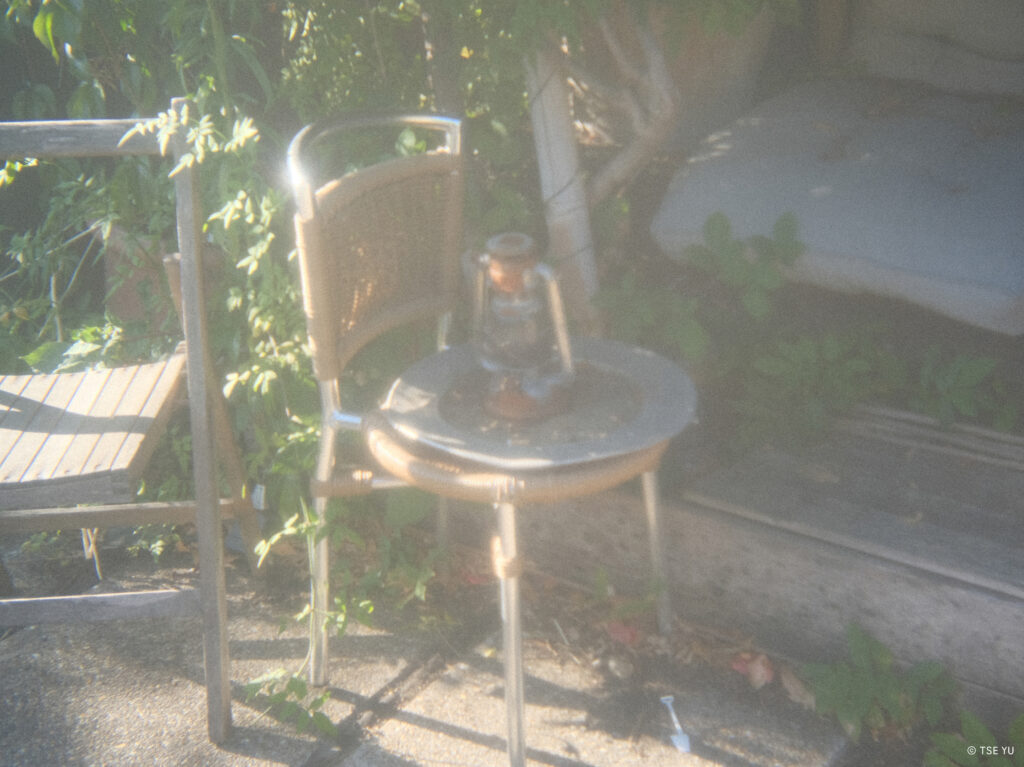
His ideas start with music. He listens to lyrics and sees pictures. “The loneliness, warmth, or closures embedded in the words all carry distinct qualities of light and tonal temperature to me. I often find myself wondering: if this lyric were a photograph, what kind of light would it possess?” He walks the city late at night with headphones on. “Suddenly, I’ll see a single streetlight cutting through the darkness, and the way the light and shadow interact just perfectly matches the mood of the song.”
He is freelancing in London across film and digital while he keeps photographing floating homes and learns more about darkroom printing.
What stays with us
Almost none of this was about equipment. It was about noticing something in a place they already knew, asking someone a real question, and waiting for the light to be right. Your software and gear can help you tell the story, but they never tell it for you.
About
RAW Talent is our editorial and award series for emerging student and graduate photographers. We give them space to show their work, talk through how they made it, and share what the move into professional practice actually looks like, all built on our editing and tethered workflow tools.
See more of the RAW talent winners’ work on Instagram:
Jenny Liao | @jennyliao_works
Changke Li | @kchangli
Tse, Yu | @jerrysphotograph
New to Capture One? Try for free for 7 days.